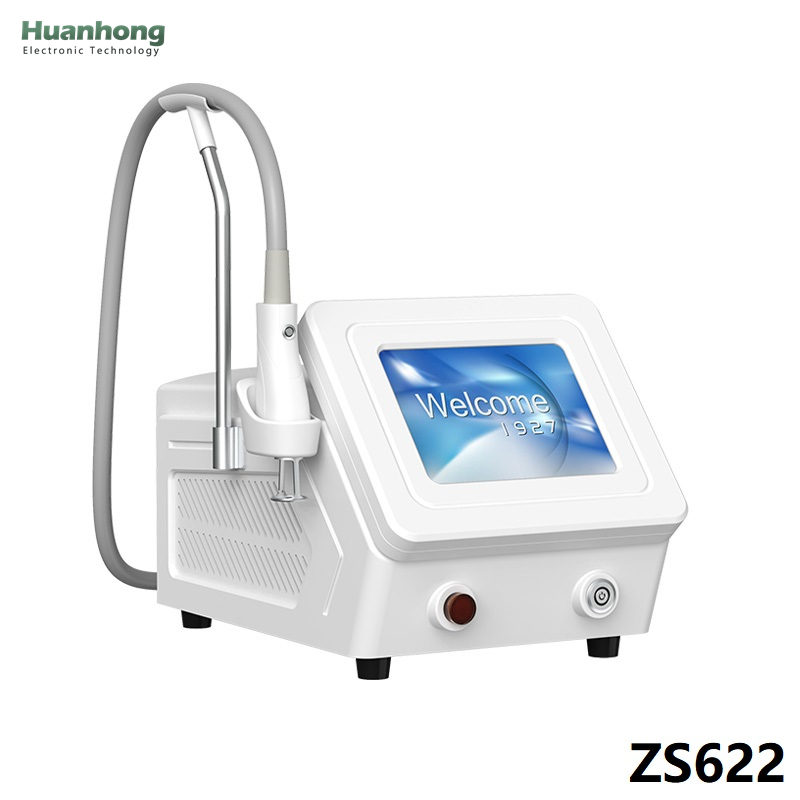
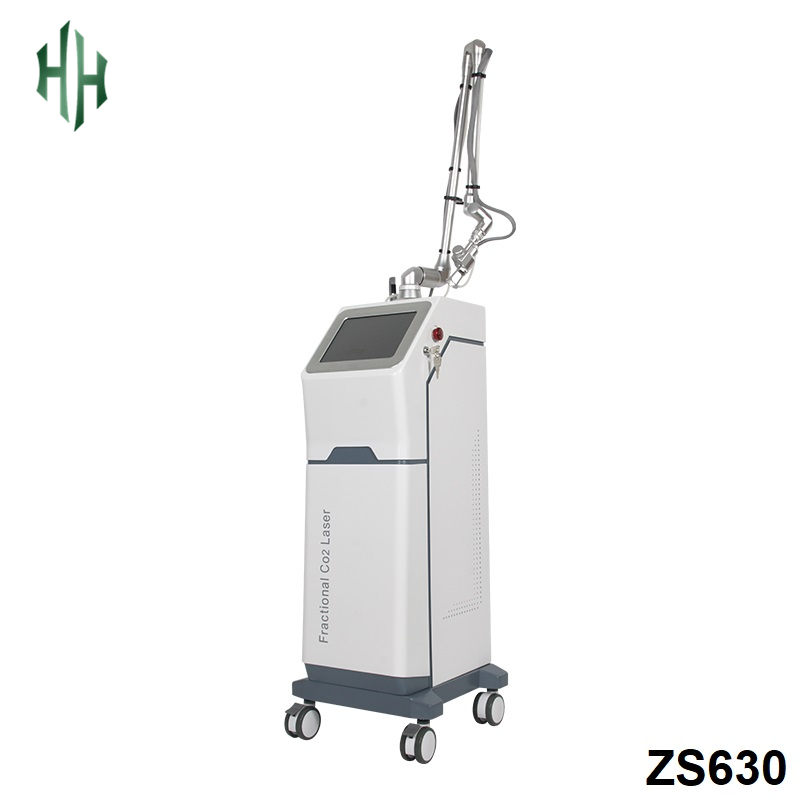
Whats the difference between Frational CO2 laser and thulium laser?
CO₂ laser and thulium laser are both top laser technologies in the field of medical cosmetology and surgery, but they have significantly different working principles and therapeutic characteristics, so they are suitable for different scenarios.
Simply put, CO₂ laser is like a "power excavator", while thulium laser is like a "precision engraving knife".
Heres a detailed comparison between them:
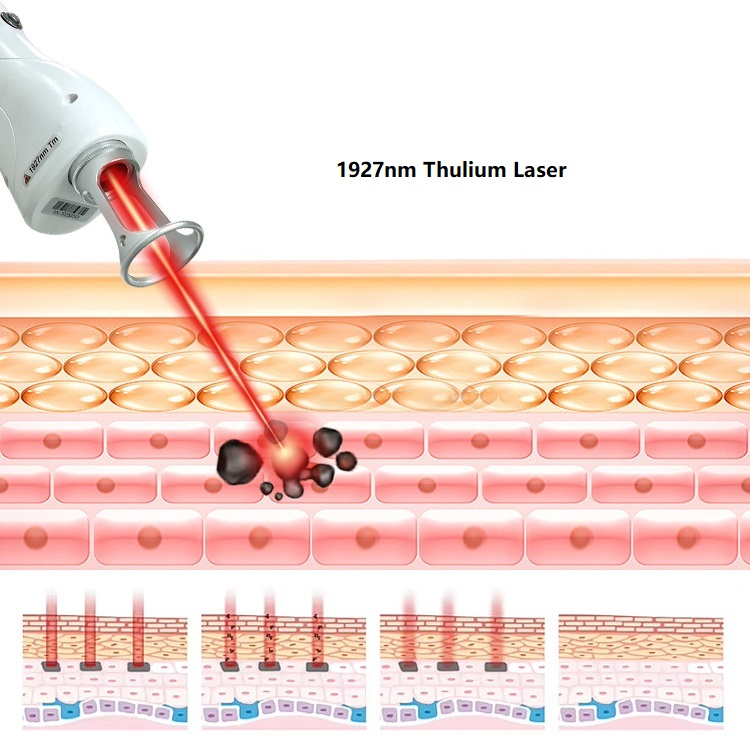
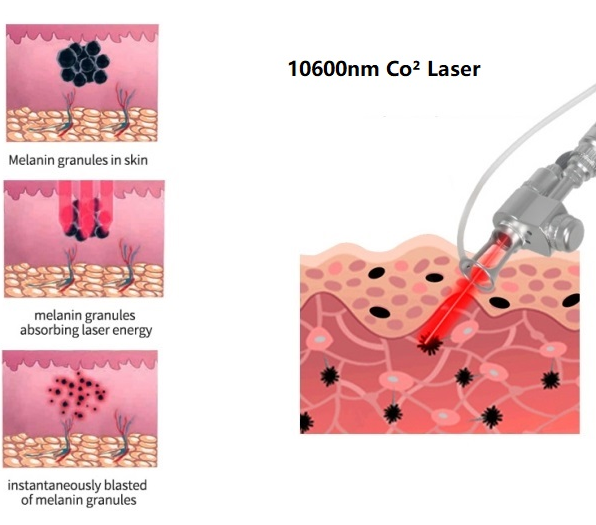
Core differences comparison table
Characteristic dimension CO₂ laser (co2 laser) Thulium laser (THULIUM LASER)
Wavelengths 10,600 nm 1,940 nm or 1,927 nm
High water absorption coefficient [about 800 cm¹] extremely high [about 16,000 cm¹] (about 20 times that of CO₂)
Mechanism of action Strong vaporization and thermal coagulation effect Accurate vaporization and cutting effect with minimal thermal damage
Effect depth deep very shallow
Thermal injury area relatively wide (100-200 μm) very narrow (<100 μm)
Main advantages: strong effect, remarkable effect, strong ability to stimulate collagen remodeling high precision, less bleeding, less thermal damage, fast recovery
Main applications: Deep dermabrasion, severe wrinkles, severe scarring, skin tumor vaporization, gynecological surgery; Superficial to intermediate dermabrasion, fine cutting, mild to moderate wrinkles/scarring, urology (prostatectomy)
Treatment sensation/anesthesia Pain is significant, usually requires block anesthesia Pain is mild, usually surface anesthesia is sufficient
Remission phase is longer (7-14 days or more), erythema phase is significantly shorter (3-7 days), erythema and edema are less severe
---
Detailed principle and effect comparison
1.Wavelength and water absorption
This is the physical basis for all differences.
- CO₂ laser: A wavelength of 10,600 nm. This wavelength of laser can be strongly absorbed by water.
- Thulium laser: The wavelength is 1,940 nm. This wavelength is closer to the absorption peak of water, so its absorption rate to water is dozens of times higher than that of CO₂ laser.
2. Mechanism and organizational effects
Different absorption rates lead to completely different tissue effects:
- CO₂ Laser: When energy is absorbed by water in tissues, it triggers intense vaporization effects that instantly remove tissue. Simultaneously, the thermal coagulation effect causes extensive damage, effectively stopping bleeding while stimulating deep collagen contraction and regeneration. However, this process may also cause thermal injury to surrounding healthy tissues.
- Excimer Laser: With its exceptional water absorption rate, the energy is instantly and completely absorbed upon contacting the tissues surface layer. This enables ultra-fine vaporization and cutting precision, functioning like a "micron-scale" surgical scalpel. The thermal damage to surrounding tissues is remarkably minimal, virtually negligible.
3. Clinical application focus
Based on these physical and biological effects, the clinical applications of the two are different:
- CO₂ laser is the "gold standard":
- Beauty field: used for severe photoaging, deep wrinkles, obvious acne pitted scars exfoliation treatment. The effect is very significant, but the recovery period is long.
- Surgery: used for vaporization resection of skin tumors, warts, and neoplasms, as well as gynecological procedures (e.g., cervical lesions, condyloma acuminatum).
- YAG laser is the "master of precision":
- Beauty: Better at improving mild to moderate skin conditions, such as fine lines (especially around the eyes), superficial scars, enlarged pores and pigmentation disorders. Its fractional mode is very popular because of its short recovery period and low risk.
- Surgery: In the field of urology, it has become the "new gold standard" for prostatectomy, because of its accurate cutting and excellent hemostasis effect, less bleeding and high safety.
How to choose?
The choice of laser depends entirely on your specific needs, the type of skin problem and the recovery time you can accept.
- Select CO₂ laser if:
- You have severe, deep wrinkles or scars (such as ice cone scars left over from acne).
- You seek the most significant and thorough single treatment effect.
- You dont mind a longer recovery period and possibly higher risk (such as postoperative pigmentation).
- Choose thulium laser if:
- Your skin problems are mild to moderate (fine lines, shallow scars, pores, pigmentation).
- You cant stand a long recovery period and want "treatment on weekends, work on Monday".
- Your skin is sensitive, or you are concerned about the risk of pigmentation.
- You need to treat delicate areas of skin such as eyelids and neck.
Important note
- Consult a professional: The final decision must be made by an experienced dermatologist or surgeon in person. The doctor will assess your specific situation and recommend the most appropriate plan.
- The operator is crucial: the laser is a tool, and the effect depends to a large extent on the skills, experience and aesthetic of the operating doctor.
- Postoperative care: No matter which laser is chosen, strict postoperative sun protection and moisturization are the key to determine the final effect and avoid complications.
Summary: CO₂ laser is powerful and used for "severe cases", but the recovery period is long; thulium laser is more accurate and gentle, used for "refinement" and "minimally invasive", with faster recovery and lower risk. There is no absolute advantage or disadvantage between the two, only whether it is suitable.